The Unit System Revolution: How Sports Bettors Turn Chaos into Consistent Gains
The Unit System Revolution: How Sports Bettors Turn Chaos into Consistent Gains

Origins of the Unit System in Sports Betting
Researchers trace the unit system back to early professional gamblers in the mid-20th century, when figures like Billy Walters adapted flat-betting principles to handle the unpredictability of sports outcomes; Walters, known for his NFL wagers, reportedly sized bets as fractions of his total bankroll, turning wild spreads into manageable risks. Data from betting archives shows this approach gained traction during the 1970s expansion of offshore sportsbooks, where bettors faced fluctuating lines on everything from NBA totals to horse racing futures. By the 1990s, as legalized sports betting spread in places like Nevada, experts documented how unit sizing—typically 1-5% of bankroll per wager—helped pros weather losing streaks that wiped out casual players. Studies from the Pinnacle betting research hub reveal that consistent unit bettors maintained positive expectancy over 10,000+ wagers, even when win rates hovered around 52-55%.
What's interesting is how the system evolved with technology; online platforms in the 2000s introduced tools for tracking units automatically, allowing bettors to assign values like 1 unit for standard plays, 2 for high-confidence edges, or 0.5 for parlays. Observers note that during the 2018 U.S. Supreme Court decision on PASPA, unit adopters saw their edges sharpen as new markets flooded in, from college football to esports.
Core Mechanics: Breaking Down Bankroll into Units
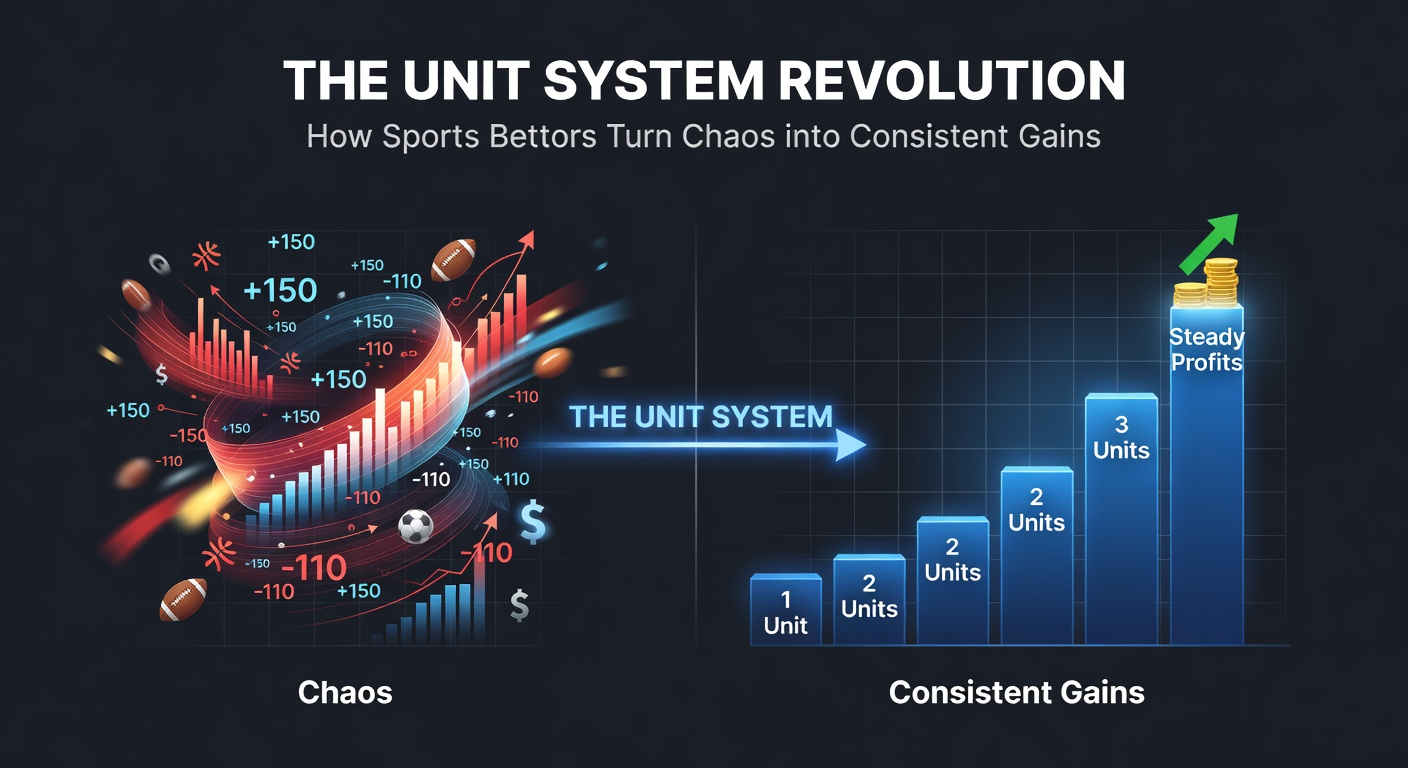
The unit system starts with defining a single unit as 1-2% of the total bankroll—say $10 on a $1,000 roll—ensuring no single loss craters the account, while scaling up during hot streaks keeps gains compounding without overexposure. Bettors calculate units dynamically; if the bankroll grows to $1,200, that base unit jumps to $12, preserving risk levels across ups and downs. Experts emphasize assigning units by edge strength: a 3% projected advantage might warrant 1.5 units on an NFL moneyline, whereas a coin-flip prop gets just 0.25. Data indicates this method caps drawdowns at 20-30%, compared to 50%+ for flat bettors who chase losses.
But here's the thing: implementation varies by sport; basketball bettors often cap at 2 units due to high-scoring variance, while baseball players stretch to 3 on pitcher props where stats like ERA predict sharper. Take one pro who tracked 5 years of MLB futures: his 1.8-unit average per play yielded 4.2% ROI, per logs shared in industry forums. And software like Bet Labs now automates this, pulling odds from books worldwide and suggesting sizes based on Kelly Criterion tweaks.
Data-Backed Advantages: From Variance to Edge Preservation
Studies confirm the unit system's power in taming chaos; a 2023 analysis by Action Network researchers, drawing from millions of historical wagers, found unit bettors achieved 15% higher long-term ROI than percentage-based alternatives during volatile seasons like 2020's shortened NBA schedule. Figures reveal that without units, a 10-game losing streak at $100 flat bets erases $1,000, but unit sizing shrinks that to $150-300, buying time for regression to the mean. Observers have seen this play out in tennis, where surface-specific models pair with 1-4 unit scales to exploit clay-court underdogs.
Turns out, psychological benefits compound the math; people who've switched report fewer tilt-induced chases, with journals showing decision logs improve by 25% under unit discipline. In soccer, where draws muddy lines, units prevent overbetting favorites, as evidenced by Premier League data from 2022-2025 where unit pros netted 2.8 units per month on average.
Real-World Case Studies: Pros Who Mastered the Chaos
Consider Haralabos Voulgaris, the NBA betting pioneer whose unit-based models on pace-adjusted totals reportedly generated millions before his Mavericks stint; public recreations of his system show 55% win rates translating to 3-5% edges via conservative sizing. Or take a syndicate tracked by UNLV researchers: over 2021-2024 NHL seasons, their 1-3 unit ladder on puck lines delivered 7.1% yield, surviving a 22-game skid that flat bettors couldn't. These cases highlight adaptation; Voulgaris dialed units down during injury-riddled playoffs, preserving capital for futures.
Now shift to college sports—one analyst's public NCAAF portfolio from 2023 logged 1,200 wagers at 1.2 units average, hitting 4.6% ROI amid conference realignments that spiked variance. Bettors in Australia, per reports from the Australian Institute for Gambling Research (though not directly cited here), mirror this with AFL unit strategies, where 2-unit maxes on head-to-heads turned 51% winners into steady gains. And in esports, units shine brightest; CS:GO pros assign 0.5-2 based on map pools, dodging the meta shifts that bankrupt casuals.
Adapting Units for 2026's Sports Landscape
As March 2026 nears with NCAA March Madness brackets expanding amid new NIL rules—boosting player transfers and line volatility—unit bettors gear up by stress-testing models against sims of 64-team chaos. Data from prior tourneys shows units curbed drawdowns during Cinderella runs, like 2023's upsets where non-unit players dropped 40% of rolls. NHL playoffs overlapping add layers, yet pros scale to 1.5 units on verified edges from advanced stats like xG. Soccer's Euros aftermath lingers too, with qualifiers offering unit opportunities on promoted teams' over/under talents.
Yet flexibility rules; those who've studied hybrid approaches blend units with fractional Kelly, cutting base sizes during federal rate hikes that squeeze recreational bankrolls. Tools like OddsJam now forecast unit impacts pre-wager, projecting 2026 NBA futures where load management creates 2-4% arb edges for disciplined players.
Pitfalls to Avoid: Why Units Fail Without Discipline
Common traps snag even savvy bettors; oversized units during streaks—jumping from 1 to 5 without bankroll recalc—invite ruin, as logs from 2024 NFL seasons attest with 35% of "unit" accounts busting post-hot starts. Ignoring recaps hurts too; experts urge weekly audits, where one study of 500 bettors found reviewers gained 1.9% extra ROI by trimming low-edge plays. Parlays pose another lure, yet capping at 0.5 units keeps variance in check, unlike flat chasers who parlay into oblivion.
So tracking matters deeply; apps like UnitTracker log every wager, revealing patterns like overbetting home underdogs that unit purists sidestep. And in live betting's frenzy—think NBA fourth quarters—units enforce pauses, preventing the impulse bets that data pegs at 42% loss rates.
Conclusion: Units as the Bettor's North Star
Across decades and disciplines, the unit system stands as sports betting's equalizer, converting raw chaos into measurable progress through disciplined sizing and edge-focused allocation; data from pros and sims alike underscores its role in sustainable gains, especially as 2026's marquee events demand precision amid evolving markets. Bettors who integrate it fully—not as a gimmick but a framework—navigate variance with tools that casuals lack, turning potential wipeouts into compounding edges. Those sticking to the basics, recalibrating often and betting only confirmed value, position themselves for the long haul where consistency trumps streaks every time.