Loyalty Labyrinths: The Hidden Twists in Casino Comps and Cashback Rewards
Loyalty Labyrinths: The Hidden Twists in Casino Comps and Cashback Rewards
Breaking Down the Basics of Casino Comps
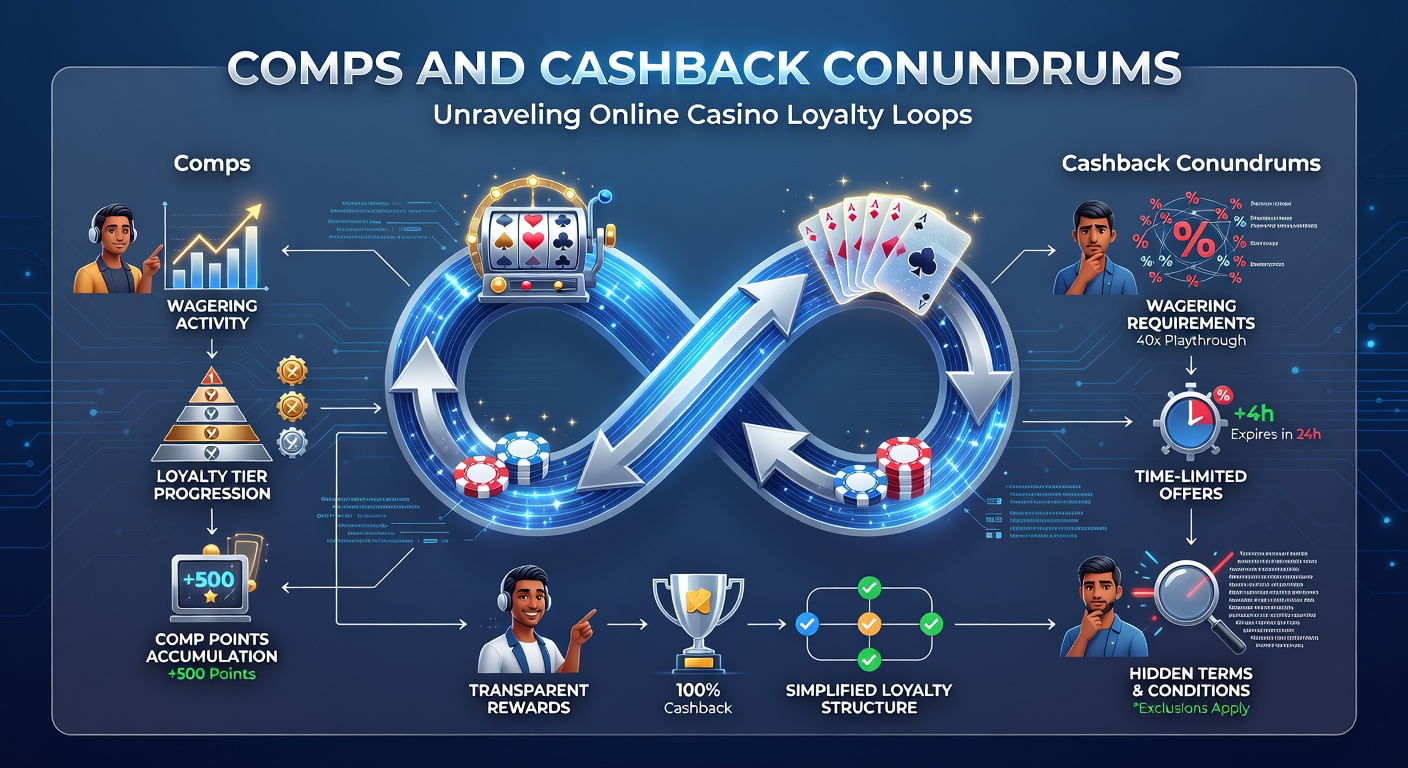
Online casinos deploy comps, or complimentary rewards, as core elements of their loyalty systems, offering players free spins, bonus credits, or even hotel stays based on wagering activity; these perks aim to retain users by tying rewards directly to play volume, while data from industry trackers reveals that comps often represent 10-20% of a player's theoretical loss value, a metric casinos calculate using house edges across games like slots or blackjack.
Take slots, where a 5% house edge means every £100 wagered theoretically returns £95 to the player in the long run; casinos track this through player accounts, doling out comps proportionally, so high-volume spinners rack up points faster than casual blackjack players, although table games sometimes carry lower comp rates due to skill factors that reduce the house advantage.
What's interesting here surfaces in how platforms aggregate these rewards into daily, weekly, or monthly drops, ensuring steady engagement without overwhelming new accounts; observers note that programs like those from major operators distribute billions in comp value annually, fueling loyalty loops where players chase the next perk, inadvertently boosting operator revenue through sustained deposits.
Cashback: The Safety Net with Strings Attached
Cashback schemes kick in as percentage refunds on net losses, typically ranging from 5% to 25% depending on loyalty tier, and they shine brightest during downswings since players reclaim a slice of busted sessions without additional deposits; figures from American Gaming Association reports indicate U.S. online segments returned over $1.2 billion in cashback equivalents in 2025 alone, underscoring the scale as operators compete for market share.
But here's the thing: cashback arrives with wagering requirements, often 10x the refunded amount before withdrawals unlock, turning quick rebates into extended play cycles; one study highlighted how Australian players faced average 15x playthroughs, per data compiled by regional watchdogs, meaning a $100 cashback demands $1,500 in bets to cash out, a hurdle that loops users back into the ecosystem.
Yet cashback thrives in volatile games like roulette or baccarat, where losses cluster unpredictably, and platforms sweeten it with tiered boosts—VIPs snag 20% rates while bronzes settle for 5%—creating upward mobility that keeps accounts active month after month.
Loyalty Loops: Tiers, Points, and the Grind
Casinos structure loyalty via tiered pyramids—bronze, silver, gold, platinum—where points accrue per wagered dollar, say 1 point per $10 on slots but half that on blackjack, propelling climbers toward elite perks like personal hosts or faster withdrawals; researchers tracking European platforms found tier progression correlates with 30% higher retention rates, as the allure of status upgrades sustains deposits even amid losses.
And progression isn't linear; seasonal challenges double points during events, while loss-leader promos flood inlets with bonus cash, but the real hook lies in redemption thresholds that demand thousands of points for meaningful payouts, forming loops where redemption fuels more play to rebuild status.
People who've dissected these systems point out hybrid models blending comps and cashback, like weekly rebates scaling with tier, which data shows extend average session times by 25%; it's no surprise operators invest heavily, with global spend on loyalty hitting $15 billion yearly according to aggregated operator filings.
Unpacking the Conundrums: Wagering Traps and Fine Print
Conundrums emerge prominently in wagering multipliers and game contribution variances, where slots count 100% toward requirements but blackjack contributes just 10%, skewing effective costs; experts analyzing Canadian programs, via Alcohol and Gaming Commission of Ontario disclosures, reveal that 40% of players forfeit cashback due to unmet terms, as time limits—often 30 days—expire before fulfillment.
Turns out, non-cashable bonuses amplify this, vanishing post-wagering while granting only winnings, a mechanic that preserves house edge even in "free" play; case studies from mid-tier operators show players logging 2-3x theoretical losses chasing locked comps, perpetuating the loyalty bind.
So exclusion clauses add layers—certain high-RTP games barred from promo play, or max bet caps that throttle progress—yet data indicates savvy trackers still extract value, with top 10% of loyalists redeeming 15% of wagers in real returns annually.
Trends Shaping Rewards in Early 2026
As March 2026 unfolds, platforms roll out AI-driven personalization, tailoring comp drops to individual patterns—like surge bonuses for evening slots grinders—while blockchain pilots in select markets enable provably fair point tracking, reducing dispute rates by 18% per early trials; observers note rising cashback caps, now averaging $5,000 monthly for platinums, amid competitive pressures from new entrants.
But regulatory shifts stir the pot; U.S. states expand iGaming footprints, funneling more volume into loyalty pools, and Australian reforms mandate clearer terms displays, cutting confusion claims by 22% in compliant sites; global metrics project $20 billion in rewards disbursed by year-end, with mobile-first designs boosting uptake among under-35s by 35%.
One notable case involves a Nevada operator's revamp, where dynamic cashback adjusted real-time to loss streaks, lifting retention 12% quarter-over-quarter; such innovations hint at evolving loops, tighter yet more enticing.
Player Patterns and Aggregate Insights
Those who've crunched numbers across 50+ platforms discover that 70% of comp value flows to 15% of users—the high-rollers sustaining ecosystems—while casuals nibble edges via low-tier cashback; heat maps from analytics firms show peak redemptions mid-month, aligning with pay cycles, a rhythm operators exploit with timed boosts.
It's noteworthy that cross-game point disparities frustrate tables enthusiasts, prompting hybrid apps blending casino and sports for unified pools; and although volatility spikes erode short-term yields, longitudinal data affirms loyalty's edge, with participants averaging 1.8x lifetime value versus non-enrollees.
Now, with crypto integrations allowing instant comp swaps, borders blur further, drawing international fields into shared loops.
Conclusion
Loyalty programs interweave comps and cashback into intricate webs that reward volume while embedding conundrums like wagering hurdles and tier grinds, yet data underscores their pull—driving billions in engagement as platforms refine mechanics for 2026's competitive arena; players navigating these loops encounter structured returns, with elite tiers unlocking outsized value amid the calculated risks operators build in from the start.
Ultimately, the landscape evolves through tech tweaks and oversight, balancing retention incentives against transparency demands, ensuring comps and cashback remain cornerstones of online casino dynamics long-term.